Robot Vacuum Mopping: Understanding 2-in-1 Limitations
Setting Realistic Expectations for Automated Mopping
Craig Foster
January 24, 2026 · 7 min read
The marketing promise is seductive: a robot that vacuums and mops your floors, eliminating both chores in one automated device. Reality is more nuanced. Robot vacuum mopping has improved dramatically in recent years, but understanding what it actually does—versus what traditional mopping does—is essential for setting appropriate expectations and deciding whether 2-in-1 capability justifies the premium price.
Let’s have an honest conversation about robot mopping technology, the different systems available, what works, what doesn’t, and when you’ll still need to break out your traditional mop.
What Robot Mopping Actually Does
First, let’s establish what robot mopping is at a fundamental level: It’s automated damp wiping of your hard floors.
That description sounds underwhelming compared to marketing claims of “deep cleaning” and “scrubbing power,” but it’s accurate. Robot mops apply moisture and move mop pads or rollers across your floor surface to lift light dirt, dust, and stains.
What robot mopping is NOT:
- Manual mopping with elbow grease and pressure
- Steam mopping with heat and sanitization
- Scrubbing on hands and knees
- Chemical-intensive deep cleaning
The best robot mops approach traditional light mopping in effectiveness. They maintain already-clean floors beautifully. They handle daily maintenance well. They cannot restore neglected, genuinely dirty floors.
Think of robot mopping as the equivalent of wiping down your kitchen counters daily versus giving them a deep clean with heavy-duty cleaners when they’re gross. Both are valuable, but they serve different purposes.
Rotating Pad Systems: The Traditional Approach
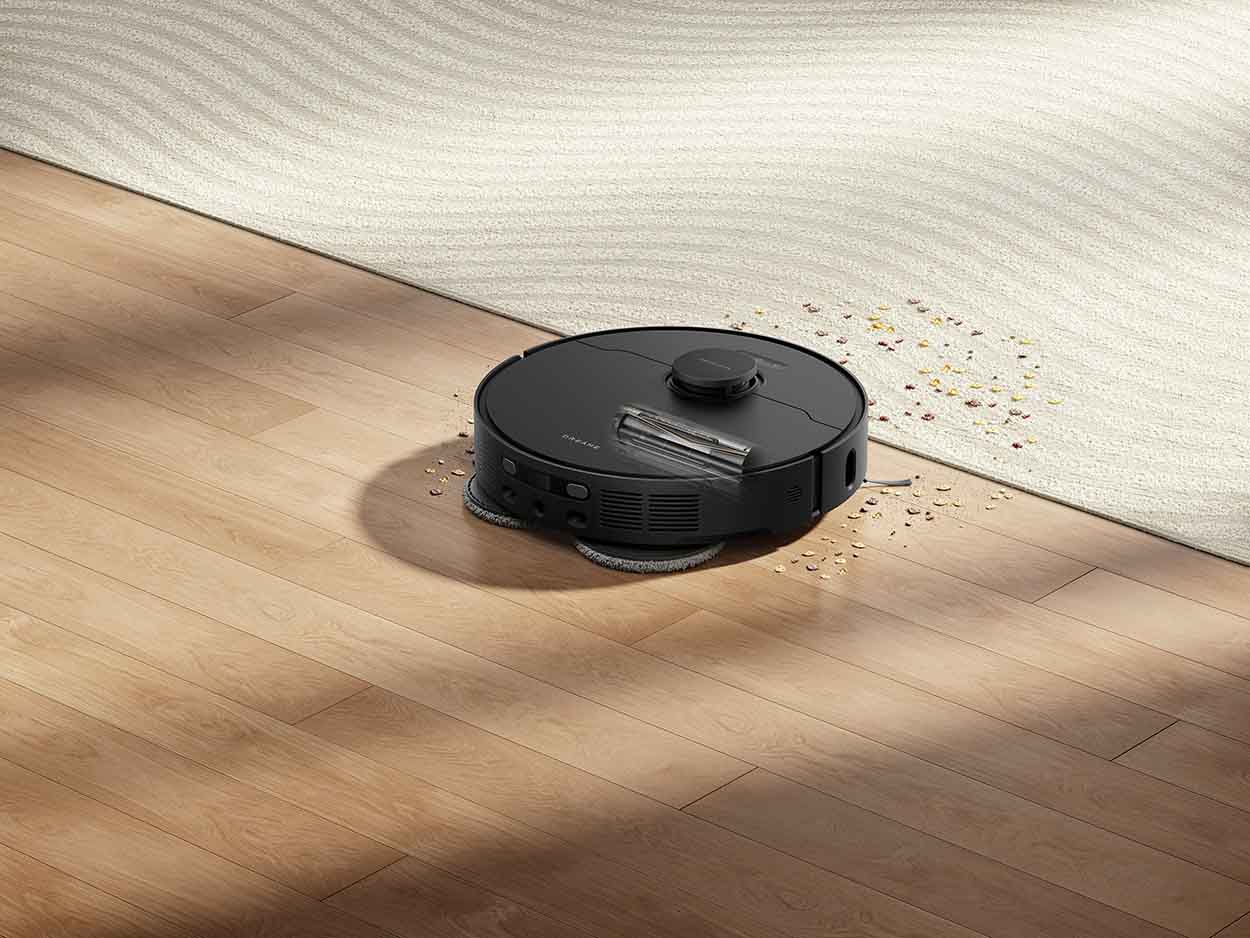
Most 2-in-1 robot vacuums use dual rotating mop pads. These are exactly what they sound like: two circular pads mounted under the robot that spin while dampened with water, wiping the floor as the robot moves.
How Pad Systems Work
The robot stores clean water in an onboard tank. As it mops, water is released onto the pads, keeping them damp. The pads rotate at 100-200 RPM while the robot travels across your floors, with the combination of rotation, moisture, and forward movement providing the cleaning action.
Models like the Shark PowerDetect NeverTouch Pro use a single pad that extends for edge cleaning, while the Dreame L10s Ultra Gen 2 uses dual pads with MopExtend technology that reaches into corners.
Pad System Advantages
Simplicity: Fewer moving parts means less to break. Pad systems are mechanically straightforward and reliable.
Lower water usage: Pads use moisture efficiently, leaving minimal water on floors. This means faster drying times and reduced risk of damaging water-sensitive flooring.
Better carpet protection: When pads lift away from the floor (most modern robots lift 10-15mm), they provide good carpet protection during mixed-floor cleaning sessions.
Quiet operation: Rotating pads make minimal noise compared to some other systems.
Pad System Limitations
Limited scrubbing pressure: Even with “downward pressure” specifications, rotating pads don’t apply the force of manual mopping. Stuck-on food, dried spills, and ground-in dirt often resist pad cleaning.
Pad contamination: As pads get dirty, they spread that dirt across subsequent floor areas. Early robot mops didn’t clean pads at all. Modern ones wash pads at the base station, but they still get progressively dirtier during a cleaning session.
Edge cleaning challenges: Round robots with round pads struggle with corners and edges despite manufacturers’ best efforts. The Dreame L10s Pro Ultra Heat addresses this with extending mops, but physics still limits circular robots in 90-degree corners.
Streak potential: Pads can leave streaks, especially on dark tile or polished stone, if water distribution isn’t perfectly even or if pads are getting dirty.
Roller Mop Systems: The New Technology
Roller mops represent a newer approach that’s gaining traction among premium models. Instead of rotating pads, these robots use a cylindrical roller—like a miniature floor polisher—that rotates continuously while in contact with the floor.
How Roller Systems Work
The roller mop spins rapidly (often 200+ RPM) while being continuously fed fresh water and squeezed clean. The Ecovacs Deebot X8 Pro Omni pioneered this with its OZMO Roller technology, which instantly self-washes the roller 200 times per minute as it cleans.
Fresh water flows onto the roller through nozzles, the roller scrubs the floor, and a scraper blade immediately squeezes dirty water off the roller into a separate dirty water tank. This happens continuously during mopping, theoretically ensuring you’re always mopping with a clean surface.
Roller System Advantages
Continuous cleaning: Unlike pads that get progressively dirtier, roller systems maintain relatively consistent cleanliness throughout the cleaning session by constantly washing the roller.
Better for wet messes: Rollers can absorb and contain liquid spills better than pads. If you spill water or your pet has an accident, a roller mop can collect the liquid rather than just spreading it around.
More consistent pressure: The roller maintains constant contact with the floor, applying consistent cleaning pressure across the entire mopping path.
Reduced streaking: The constant washing helps minimize the streaks that plague some pad systems as they get dirty.
Roller System Limitations
Complexity: More moving parts means more potential failure points. The continuous water flow, scraping mechanism, and dirty water collection add mechanical complexity.
Higher water usage: Roller systems use more water than pads, both for cleaning and for the continuous roller washing. This means more frequent tank refills and longer floor drying times.
Carpet protection challenges: Rollers are harder to lift completely clear of carpet. Some systems use roller shields or guards, but the protection isn’t as foolproof as lifting spinning pads.
Cost: Roller systems add significant cost. The technology is currently limited to premium models, making them inaccessible to budget-conscious buyers.
Maintenance: Roller assemblies require regular cleaning to prevent buildup and maintain the self-washing mechanism’s effectiveness.
Hot Water Mop Washing: Marketing Hype or Real Benefit?
Many premium robots advertise hot water mop washing at temperatures ranging from 130°F to 167°F. Is this genuine improvement or marketing theater?
The Actual Benefits
Hot water washing does provide real advantages:
Grease dissolution: Kitchen floors collect cooking oils that resist cold water. Hot water dissolves these oils effectively, preventing the buildup that eventually requires manual intervention.
Bacteria reduction: Hot water kills bacteria more effectively than cold water, though “kills 99.99% of bacteria” claims need context—they refer to the mop pad cleanliness, not your floor.
Odor prevention: Mop pads washed in hot water don’t develop the musty smell that plagues cold-water systems. The Dreame L10s Pro Ultra Heat at 136°F demonstrates this benefit clearly—pads stay fresh significantly longer.
Stain lifting: For the robot itself, hot water cleans pads more thoroughly, extending their effective life and maintaining mopping performance over time.
The Limitations
Hot water washing heats the water that cleans your mop pads at the base station. It doesn’t heat the water used to mop your floors. You’re not getting hot water mopping—you’re getting regular mopping with pads that were cleaned in hot water.
The distinction matters for expectation setting. Hot water washing benefits the robot’s maintenance and the cleanliness of its mops, which indirectly benefits your floors. But it’s not the same as mopping your floors with hot water directly, which would require heating water continuously during cleaning—a feature no consumer robot currently offers.
When You’ll Still Need Traditional Mopping
Let’s be direct: robot mopping reduces traditional mopping frequency but doesn’t eliminate it. Here’s when you’ll still reach for your traditional mop:
Deep Cleaning and Restoration
If floors are actually dirty—not just dusty or lightly soiled—robot mops struggle. Moving into a new house, after a renovation, or following an extended period of neglect all require traditional mopping first to establish baseline cleanliness.
Robot mops excel at maintenance, not restoration.
Stuck-On Messes
Dried soda spills, tracked-in mud that’s dried, spilled food that’s been stepped on—these require the pressure and scrubbing action that only manual mopping provides. Robot mops might improve these messes over multiple passes, but you’ll wait days for results you could achieve in minutes manually.
Sanitization Requirements
If you need actual sanitization—post-illness deep cleaning, preparing for a newborn, addressing biohazard situations—robot mops don’t provide the chemical contact time or heat required for proper sanitization. You need manual mopping with appropriate cleaning solutions.
Problem Areas
Certain floor types or conditions challenge robot mops:
- Textured tile with deep grout lines
- Stone with rough surfaces
- Areas under unmovable heavy furniture
- Tight spaces the robot can’t access
- Corners and edges despite extending mops
You’ll periodically need to manually address these areas that robots can’t reach or clean effectively.
The 2-in-1 Value Question
Should you buy a 2-in-1 robot vacuum and mop, or separate devices? The answer depends on your priorities and budget.
Buy a 2-in-1 If:
You have mostly hard floors: If 70%+ of your home is hard flooring, mopping capability provides daily value.
You hate mopping more than vacuuming: If mopping is your most-dreaded chore, reducing its frequency from weekly to monthly justifies the premium.
You want simplified maintenance: Managing one device instead of two reduces mental overhead even if it doesn’t reduce actual work much.
Budget allows: Quality 2-in-1 robots cost $600-1,200. If that fits your budget and provides value you’ll use, it’s worth considering.
The eufy X10 Pro Omni delivers good mopping at a mid-range price point, while the Ecovacs Deebot X8 Pro Omni represents the premium end with roller technology.
Skip the Mopping If:
Your home is mostly carpet: Mopping capability costs $200-400 in robot pricing. If you only mop your kitchen and bathrooms, a cheaper vacuum-only robot plus traditional mopping makes more sense.
You already don’t mind mopping: If mopping doesn’t bother you, save money and get better vacuuming performance with a vacuum-focused model like the Shark AI Ultra.
You need absolute cleaning perfection: If you’re particular about mopping and won’t be satisfied with “good enough” maintenance mopping, you’ll manually mop anyway. Don’t pay for robot mopping you won’t trust.
Budget is tight: Robot mopping is a luxury feature. A $400 vacuum-only robot provides more value than a $700 2-in-1 if budget is limited.
Getting the Most From Robot Mopping
If you invest in 2-in-1 capability, maximize its effectiveness:
Start With Clean Floors
Robot mops maintain cleanliness better than they establish it. Manually mop your floors to baseline clean before introducing a robot. This gives the robot a fighting chance at success.
Run More Frequently
Counter-intuitively, mopping more often works better with robots. Daily light mopping prevents buildup that daily light mopping can’t remove. It’s easier for the robot to handle yesterday’s light dust than last week’s accumulated grime.
Use Proper Cleaning Solution
If your robot supports cleaning solution (most modern ones do), use it. Plain water removes some dirt, but cleaning solution provides chemical action that improves results significantly.
Follow manufacturer recommendations on solution types. Some robots require specific formulations to protect internal components.
Clean Mop Pads Regularly
Even robots with automatic pad washing benefit from occasional manual cleaning. Remove pads, hand wash with warm water and detergent, and replace them fresh. This maintains peak mopping performance.
Realistic Expectations
Your floors will look cleaner with robot mopping than without it. They won’t look as clean as after manual mopping. If you can accept “noticeably better but not perfect,” you’ll be happy with robot mopping.
The Future of Robot Mopping
Robot mopping technology is evolving rapidly. Current trends suggest:
Steam mopping integration: Adding heat to the actual mopping process (not just pad washing) would dramatically improve results. Technical challenges remain, but it’s likely coming.
Better pad/roller materials: Improved materials that clean better, last longer, and resist bacterial growth.
AI-powered dirty floor detection: Robots that recognize dirty areas and automatically increase passes or pressure.
Improved corner cleaning: Extending mops help, but truly effective corner cleaning requires innovation in robot shape or mechanism design.
The Roborock Qrevo Curv and Dreame L10s Ultra Gen 2 show where technology is heading—smarter, more capable, but still fundamentally limited by physics and mechanics.
The Honest Verdict
Robot vacuum mopping works well for what it is: automated light maintenance of hard floors. It reduces traditional mopping frequency from weekly to monthly or less for most households. It keeps floors looking noticeably cleaner day-to-day.
But it’s not magic. It won’t eliminate manual mopping entirely. It won’t handle serious messes. It won’t sanitize or restore neglected floors.
The question isn’t “does robot mopping work?” It’s “is robot mopping worth it for your specific situation?” For many people with significant hard floor area who hate mopping, the answer is yes. For others with mostly carpet who tolerate mopping, the answer is no.
Understand what you’re getting—automated maintenance wiping, not deep cleaning—and you’ll be satisfied with robot mopping. Expect it to replace all manual mopping, and you’ll be disappointed.
Choose based on your needs, not marketing promises, and you’ll join the many satisfied owners who appreciate their robot’s mopping capability for what it realistically provides: noticeably cleaner floors with dramatically less effort, even if not absolutely perfectly cleaned floors with zero effort.
Share this article